
The Problem: Google Ads Wasn't Built With Tradespeople in Mind
A plumber in Cork gets in touch with us after burning through €800 in a single month on Google Ads. Two leads. Neither booked. Sound familiar? The problem wasn't that Google Ads doesn't work. The problem was that the campaign was built using the same logic you'd apply to an online shop selling trainers, not a local emergency plumbing service.
Google Ads is a powerful platform, but the default settings, tutorials, and even the recommendations Google itself pushes are designed to maximise broad reach. For an e-commerce brand with a nationwide audience, that makes sense. For a roofer in Manchester who only covers a 15-mile radius, it's a recipe for wasted spend.
Trades businesses operate in a completely different search environment. Customers searching for a plumber or electrician are typically in urgent need, searching hyper-locally, and far more likely to pick up the phone than fill in a contact form. A campaign that ignores those realities will cost you money every single day. Let's walk through the most common mistakes we see, and what a properly built campaign looks like instead.
Mistake #1 — Broad Match Keywords That Burn Through Your Budget
The first thing Google nudges you towards when setting up a campaign is broad match keywords. Type in "plumber Cork" and Google will happily show your ad for searches like "plumbing courses Cork", "plumbing jobs Cork", or even "Cork city news". You're paying for every one of those clicks.
Broad match is designed to cast a wide net and let Google's algorithm figure out relevance over time. That might work if you have thousands of euros a month to spend on data. Most tradespeople don't. The result is a campaign that eats budget on irrelevant searches before it ever gets the chance to find the customers who actually want to hire you.
The fix is straightforward. Use phrase match or exact match keywords for your core search terms. "Emergency plumber Cork", "boiler repair Manchester", "roofer Dublin" — these are the terms where every click has genuine intent behind it. Tighter match types mean less volume, but far higher quality. For a trade business where a single job is worth hundreds or thousands of euros, lead quality always wins over raw click volume.
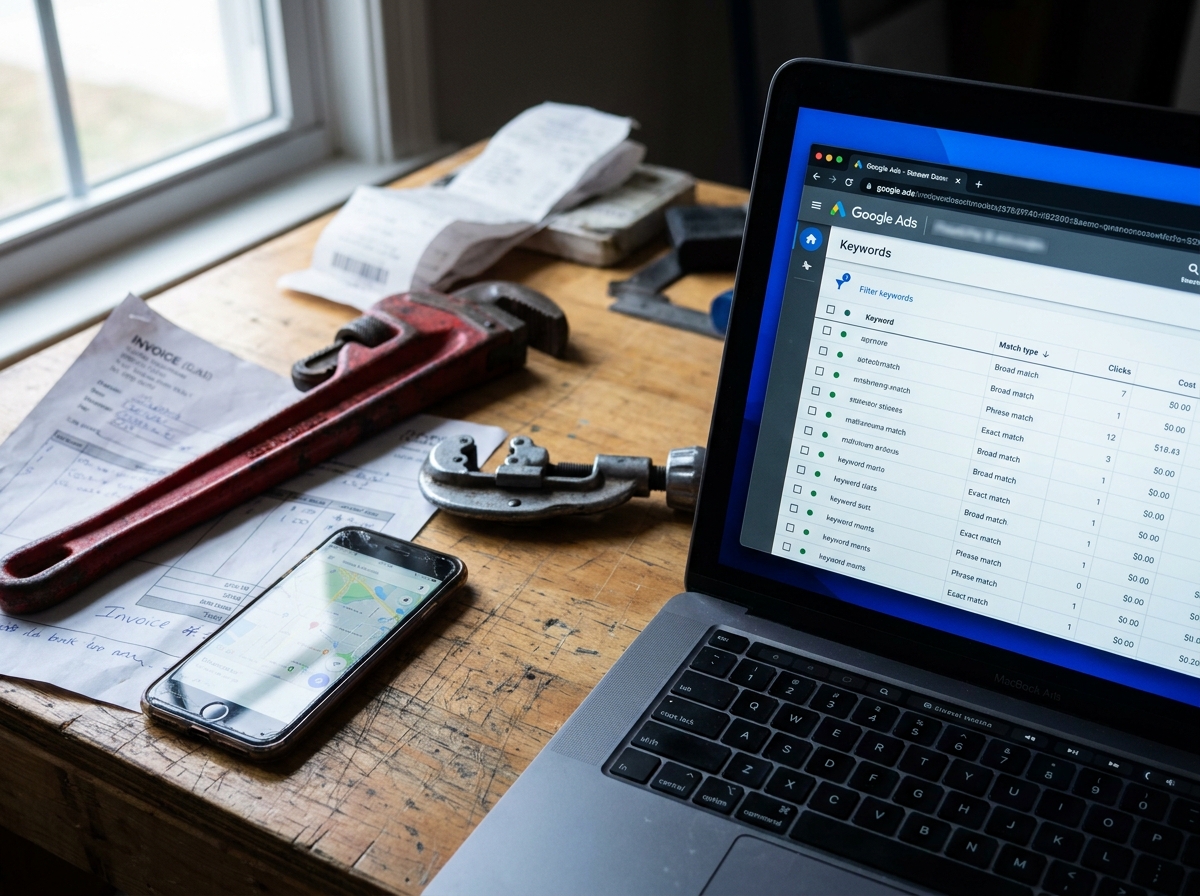
Mistake #2 — No Negative Keyword List (You're Paying for the Wrong Searches)
Even with tighter match types, irrelevant searches will slip through. That's where negative keywords come in. A negative keyword tells Google: don't show my ad for this. If you're an electrician looking for residential jobs, you probably don't want your ad appearing for "electrician apprenticeship", "DIY wiring guide", or "electrical engineering degree". Without a negative keyword list, you're paying for all of them.
This is one of the most consistently overlooked parts of Google Ads setup, and it's almost never covered in the basic guides. For tradespeople, a solid negative keyword list should include job-related terms (apprentice, course, training, jobs, career), DIY-related terms, and any locations outside your service area.
Building and refining your negative keyword list isn't a one-time job. The first few weeks of a campaign should involve checking the Search Terms report regularly, identifying irrelevant queries, and adding them as negatives. This single habit can reduce wasted spend dramatically and improve your cost per lead without raising your budget at all. We build out negative keyword lists as standard for every Google Ads campaign we run for tradespeople.
Mistake #3 — Ignoring Call-Only Ads and Call Extensions
Most people searching for a tradesperson don't want to fill in a form and wait for a callback. They want to pick up the phone and speak to someone now. This is especially true for urgent jobs: a burst pipe, a roof leak after a storm, a boiler that's gone out in January.
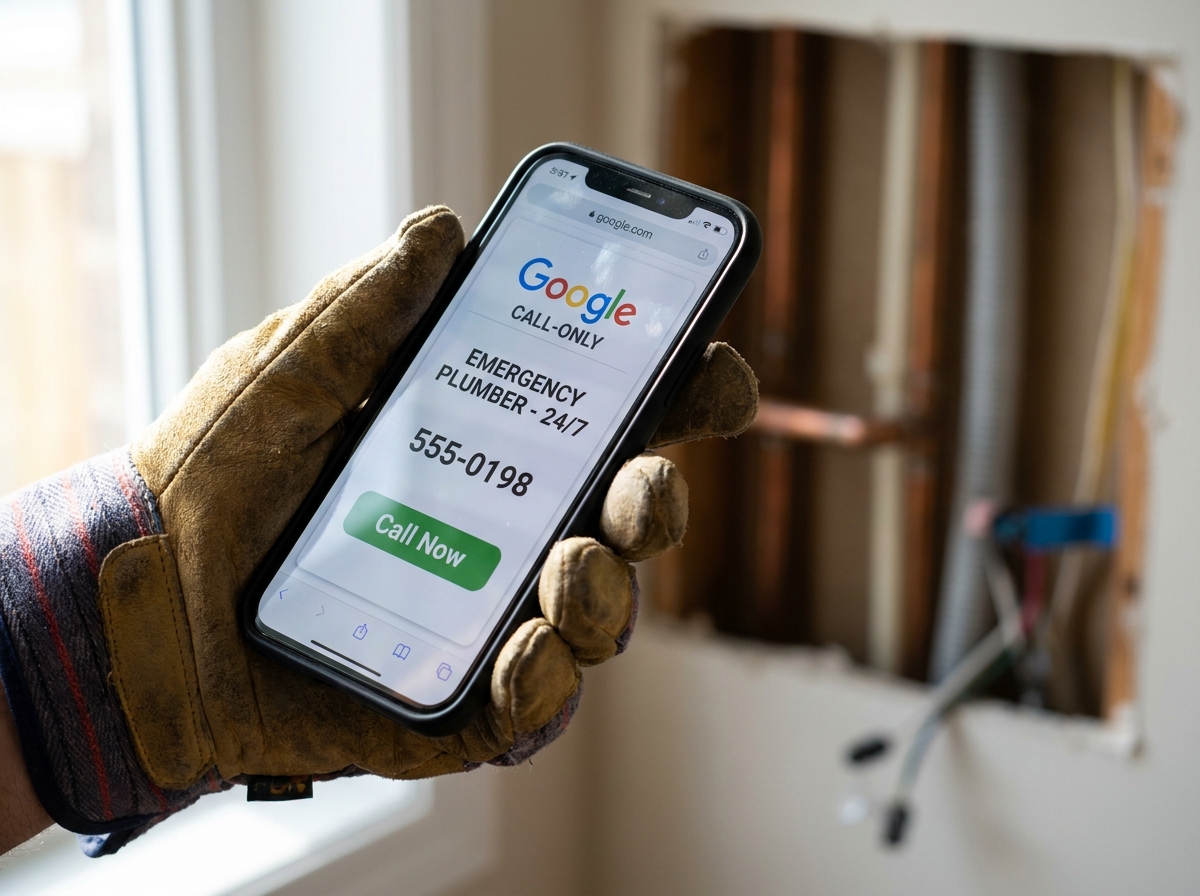
Call-only ads show your phone number as the primary action on mobile, meaning a tap on the ad dials you directly. No landing page required. No form to fill. Just a direct line from the search to your phone. Call extensions do something similar, adding a clickable phone number beneath a standard text ad.
We see tradespeople running desktop-focused text ads with no call functionality and then wondering why the click-through rate is low. On mobile, which is where the vast majority of urgent trade searches happen, a call-focused ad will almost always outperform a standard one. If your campaign isn't built around calls, you're ignoring the most natural conversion path for your customers.
Mistake #4 — Location Targeting That's Too Wide
Google's default location targeting setting is broader than most people realise. By default, your ads can show to people who are "interested in" your target location, not just people physically in it. That means a plumber targeting Cork city can end up paying for clicks from people in Dublin who once searched for Cork-related content.
Beyond that, many tradespeople set their target area too wide simply because they're not thinking carefully about it at setup. A sole trader who covers a 10-mile radius around Belfast shouldn't be running ads across all of Northern Ireland. Every click from outside your actual service area is dead money.
The right approach is to target a precise radius around your operating area and switch location targeting to "people in or regularly in" your chosen location. Cross-reference your target radius against where your past customers actually came from. If you've never taken a job more than 12 miles from your base, don't pay for clicks from 25 miles away. Precision here directly lowers your cost per lead.
Mistake #5 — Sending Clicks to Your Homepage Instead of a Lead-Focused Page
Someone searches "emergency roofer Dublin", clicks your ad, and lands on your homepage. Your homepage has your company story, a list of all your services, some photos, and a contact form buried at the bottom. They click the back button in under ten seconds. You just paid for that click.
Your ad makes a specific promise. "Emergency Roof Repairs in Dublin. Available Today. Call Now." Your landing page needs to deliver on that promise immediately. It should confirm they're in the right place, show a clear phone number above the fold, explain what happens when they call, and remove every distraction that might pull them away before they convert.
A generic homepage will not do this. You need a dedicated landing page that mirrors the ad's message, uses the same location and service language, and has one job: turn the click into a call or an enquiry. This is one of the highest-leverage changes you can make to a campaign that's already running. We build lead-focused pages as part of our Website Design & Development service specifically because we've seen how much of a difference they make to Google Ads conversion rates.
What a Trades-Specific Google Ads Campaign Actually Looks Like
A well-built campaign for a tradesperson starts with tight keyword research focused on service plus location combinations. Think "gas boiler service Cork", "emergency electrician Manchester", "flat roof repair Dublin". These are high-intent, low-competition terms compared to the broad generic alternatives, and they attract customers who are ready to book.
The campaign structure separates different services into their own ad groups, with ad copy that speaks directly to the specific job. An ad for boiler repairs says something different to an ad for new boiler installations. Each ad group feeds into its own landing page that mirrors the message.
Call-only ads and call extensions are built in from the start. Bid adjustments are set to increase bids on mobile devices, where most urgent searches happen. Location targeting is locked to a precise radius. A negative keyword list is in place before the first euro is spent, and it's reviewed and expanded weekly in the early stages. Ad scheduling ensures your ads run when you can actually answer the phone. This is the level of detail that separates a campaign that generates consistent leads from one that quietly drains your bank account. You can also read Google's own guidance on campaign structure to understand the foundations, but the trades-specific layer on top of that is what we specialise in at LeadVine.
Is Google Ads Right for Your Trade Business?
Google Ads works best when there's clear, active demand for what you offer. For most tradespeople, that demand exists year-round. Homeowners and businesses need plumbers, electricians, roofers, and other tradespeople regularly, and they search on Google when they do. The intent is there. The question is whether your campaign is set up to capture it efficiently.
If you're in a competitive market and want leads quickly, Google Ads is one of the fastest ways to get your phone ringing. It doesn't have the compounding long-term benefits of SEO, but it can generate results within days of launch rather than months. For many tradespeople, running both in parallel makes sense: Ads for immediate lead flow, SEO for sustainable visibility over time.
The key is making sure any budget you put in is working as hard as possible. A poorly built campaign will frustrate you and put you off the platform entirely. A properly built one, designed specifically for how your customers search and how your business operates, is one of the most effective marketing tools available for a trades business in the UK or Ireland.